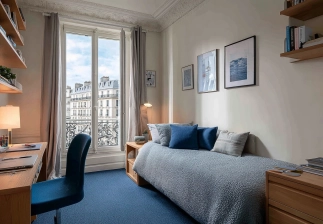
The Marais is the most-walked quarter of Paris — and one of the least lived-in by the people who dream about it. Housing for services flips that logic: instead of paying for the address, you make yourself useful, and the room follows.
What does Paris 3 offer someone looking to live differently?
A heritage village in the city centre: 32,772 residents at the 2022 census according to INSEE — a rare human scale for such a sought-after area. That is exactly where a service exchange thrives: households here are settled for the long term, and every spare room is worth gold.
Few settings compare: classical-era mansions, cobbled courtyards, the Picasso museum in the Hôtel Salé, Carnavalet to tell the city's story. Daily life gravitates to a market founded in 1615 — the Enfants Rouges, elder statesman of the city's covered halls — where lunch is shared among neighbours more than tourists. The 3rd lives like a small town: you greet your cheesemonger, know your bookseller, and that familiarity is what produces these offers.
How does the exchange differ from one corner of the 3rd to another?
Three distinct moods. The Haut Marais gathers creatives and gallery owners; Arts-et-Métiers, its students and engineering school; Temple–Enfants Rouges, its families and long-faithful elders. Each zone produces its own listings, with duties shaped by the daily rhythm of the hosts who write them.
In the Haut Marais, the typical host works in fashion or art and wants logistical backup — dry-cleaning, parcels, plants, a presence during travel. Around Arts-et-Métiers and the CNAM, listings lean towards tutoring and homework help, driven by families close to the schools. Towards the Temple and the covered market, it is the neighbourhood's elders who open their doors: evening company, a shared walk to the stalls, accompanied appointments. Whatever the corner, a framed exchange agreement is signed before arrival: it names the help, sets its weekly pace, fixes how long the stay runs and how it can be unwound.
Where should your search start around the Temple?
Three moves: open the Paris 3 section on colocationsparis.com, switch on alerts so no new listing slips past, and polish your first message — Marais hosts receive several applications quickly and keep the ones showing a real grasp of the help required.
Getting in and out is effortless: line 3 calls at Temple and Arts-et-Métiers, line 11 threads Rambuteau to Châtelet, and line 8 traces the northern edge, with République a short walk away. By bike, the whole centre sits within ten minutes. And when the Marais runs out, the map keeps going — 2nd, 4th, 11th. A complete profile published today can be moving in before the month is out.
Frequently asked questions
Do I get my own key and day-to-day independence?
In most cases, yes: residents hold their own key, come and go freely, and organise their days as they wish outside the agreed help slots. House rules — quiet hours, shared spaces — come up at the first meeting and go straight into the agreement.
Can I have guests in my room?
That depends entirely on the household: some accept occasional visitors, others prefer to protect their privacy. The only real mistake is not asking before moving in — the matter is settled upfront, not at the front door.
What happens when I go on holiday?
Absences are planned as in any shared home: give notice early, agree on dates, and the help resumes on return. If the host relies on continuity — company for an elder, say — the agreement spells out how absences are covered or rearranged.
Do hosts in the Marais accept pets?
Rarely, and never by default: many homes are compact, some hosts have allergies or animals of their own. If you have a pet, say so in your very first message and search specifically for listings that mention it — surprises help no one.