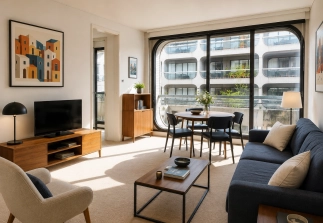
There is one luxury the 16th hands out better than anywhere else: silence. Residential streets, double courtyards, the gated villas of Auteuil — you sleep well here, you work well here. For anyone seeking a room in return for helping time, that calm is not a backdrop: it is a condition for the stay to succeed.
Is the 16th really suited to this arrangement?
More than people assume: 159,733 residents — INSEE's 2022 survey — including a large share of households settled for decades in spacious flats. Many live alone or as couples; trusted company, groceries taken care of and regular accompaniment matter more here than any extra income ever would.
The territory explains a lot: Passy and Auteuil were villages before they were quarters, and it still shows — food shops, covered markets, a school on every street. The Maison de la Radio, inaugurated in 1963, rounds off the riverbank; the bois de Boulogne opens the west; the Trocadéro heights face the Eiffel Tower across the water.
Which questions should you ask the host before saying yes?
Five are enough to light up the essentials: what does a real week look like in your home? Who else lives or works in the flat? What are the house rules? What happens during your absences and holidays? And how will we adjust if the needs change over the months?
The answers tell you more than the listing ever will: a host precise about their week will honour the slots; a household clear about its rules will spare you misunderstandings; a home where staff already work calls for well-drawn roles. Note the answers as you talk — they will feed straight into the document described below.
Because everything ends up in the written hosting pact, signed by the two of you before arrival: the room in your care and the open spaces are described there, every service named, the weekly total of hours locked, and the end of the stay organised — notice, keys, a joint tour of the home. What was said aloud finds its place there in writing.
How should you begin between Passy, Auteuil and the Trocadéro?
Spot the listings whose pace matches yours — the 16th favours steady, lasting commitments over quick fixes — then present yourself with care: the neighbourhood notices. Take the step: colocationsparis.com. A detailed profile and a reference make all the difference here, often from the first message.
Métro lines 6, 9 and 10 cross the arrondissement and the RER C stops at Boulainvilliers and avenue du Président-Kennedy. To sample other atmospheres, the eighth, fifteenth and seventeenth arrondissement pages are worth the detour, from Monceau to Les Batignolles.
Frequently asked questions
Is a particular dress code expected?
No official code, but a neat presentation puts both sides at ease, especially at the first meeting. A good yardstick: dress as you would to meet a friend's grandparents — no suit, nothing sloppy either.
Can the host ask for discretion about their private life?
Yes, and it is common in the 16th: what is lived and said in the household stays there. That expectation can be written into the pact; it also runs both ways, since your own privacy deserves the same respect.
How do you get along with household staff already in place?
By drawing the lines early: your services never replace an employee's work — they add to it on other slots. Ask who does what, and have it put in writing to avoid any overlap.
Do the concierge and the building have a say?
Your presence is the business of the household hosting you, not of the co-owners. Simply introduce yourself to the concierge on arrival and respect the building's customs — common areas, hours, visitors: in these buildings, quiet is a shared rule.